
Summary: As North India moves from the humid post-monsoon season into winter, many people notice a strange shift—acne suddenly calms down, but the skin starts feeling dry, tight, and sensitive. This transition from humidity to cold, dry air can weaken your skin barrier, the natural shield that keeps moisture in and irritants out. Once this barrier is damaged, your skin becomes prone to flakiness, redness, itching, and even breakouts.
At Dr. Asma Skin Clinic in Chowk, Thakurganj, and Barabanki, we often see this exact pattern every December: post-acne patients returning with complaints of dry, irritated, or sensitive skin. This blog explains why it happens, how to protect your skin barrier, and which dermatologist-approved treatments help restore healthy, glowing skin.
The Seasonal Skin Shift – Why It Matters
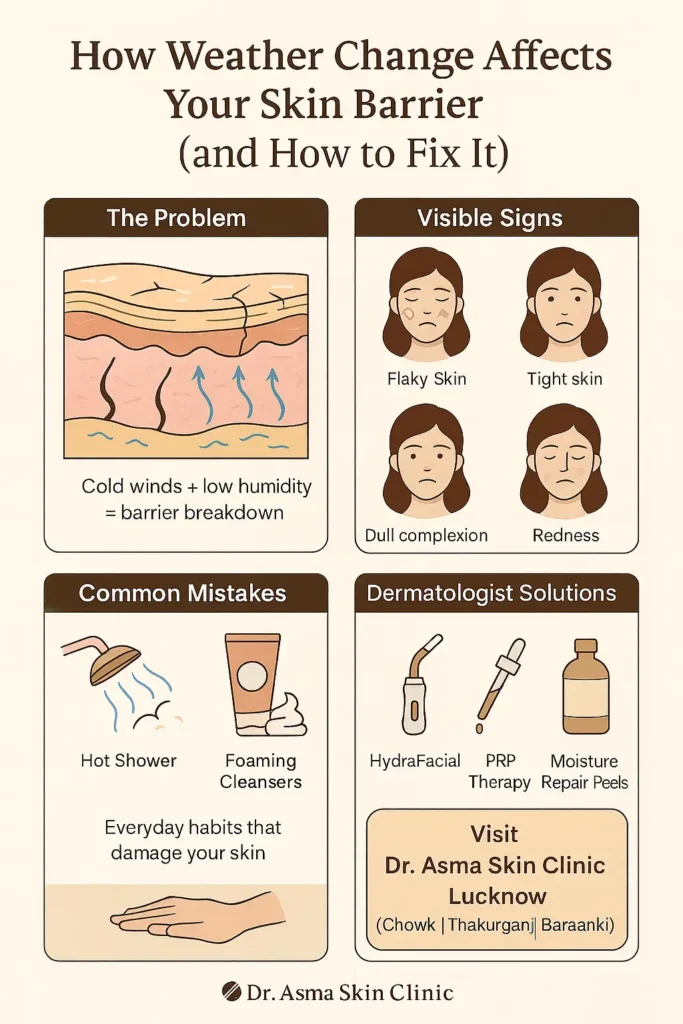
Your skin constantly adapts to its environment. After months of monsoon humidity, October and November bring drier air, while December intensifies cold winds and lower moisture levels.
This sudden shift stresses your skin, which is still recovering from the post-monsoon acne phase.
Common symptoms seen during this transition:
- Dryness and tightness after washing
- Flaky patches on the cheeks and around the mouth
- Increased sensitivity to creams or soaps
- Burning or redness after sun exposure
- Makeup not sitting well or accentuating dry spots
If this sounds familiar, your skin barrier is likely compromised.
What Is the Skin Barrier and Why It’s So Important
The skin barrier, also called the stratum corneum, is the outermost layer of your skin. It acts like a protective wall made of lipids, natural oils, and proteins that:
- Lock in moisture
- Prevent irritants and pollutants from entering
- Maintain pH balance
- Support the growth of healthy skin cells
When this wall is damaged — whether by weather, harsh cleansers, or over-exfoliation — it allows water to escape (TEWL: Transepidermal Water Loss) and makes your skin vulnerable to inflammation, acne, and infection.
How Seasonal Change Damages the Skin Barrier
As winter sets in, several environmental and lifestyle factors start to weaken your skin’s natural defense:
1. Low Humidity Levels
Cold air holds less moisture, and indoor heating further dries out the environment.
Result: Water evaporates quickly from your skin, leading to dehydration and tightness.
2. Over-Cleansing or Hot Showers
People often wash their face or bathe with hot water during winter, stripping natural oils.
Result: Compromised lipid layer → dryness and barrier thinning.
3. Incorrect Moisturizer Use
Switching from light gels (used during acne season) to no moisturizer or heavy occlusive creams can either dehydrate the skin or clog pores.
Result: Barrier stress → dryness + breakouts simultaneously.
4. Residual Post-Monsoon Sensitivity
After months of humidity, many people use active ingredients like salicylic acid or benzoyl peroxide for acne.
Result: In December, these actives may suddenly cause irritation due to dry weather.
5. Pollution and Smog
Winter pollution in Lucknow and nearby cities peaks in November–January, coating skin with fine particles that oxidize and inflame it.
Result: Weak barrier, dull tone, and patchy roughness.
Signs Your Skin Barrier Is Damaged
If you’ve recently transitioned from oily-acneic skin to dry and flaky skin, these symptoms indicate barrier impairment:
- Persistent redness or sensitivity
- Burning after applying moisturizer or sunscreen
- Peeling or rough patches
- Acne that feels irritated rather than oily
- Sudden dullness despite using serums or creams
Dermatologist Insights – How to Repair the Skin Barrier Naturally
At Dr. Asma Skin Clinic, we believe barrier healing requires balancing both home care and professional treatments. Here’s what our experts recommend:
1. Simplify Your Routine
Stop using harsh exfoliants, scrubs, or multiple actives together. Use:
- Gentle pH-balanced cleanser (non-foaming)
- Hydrating toner or mist
- Barrier-repair moisturizer with ceramides, squalane, or hyaluronic acid
2. Switch to Winter-Appropriate Moisturizers
Use cream-based moisturizers instead of gels.
Ingredients to look for:
- Ceramides & Fatty Acids: Rebuild lipid structure
- Niacinamide: Soothes inflammation
- Panthenol & Glycerin: Improve hydration levels
3. Hydrate from Within
Drink at least 2–2.5 liters of water daily and include foods rich in omega-3 fatty acids, vitamin E, and zinc.
These nutrients strengthen the skin from the inside out.
4. Limit Hot Showers & Over-Cleansing
Use lukewarm water and avoid washing your face more than twice a day. Follow every cleanse with a moisturizer within 2–3 minutes (“moisture-lock rule”).
5. Sun Protection Is Still Non-Negotiable
Even in winter, UV rays and blue light can damage the skin barrier. Use broad-spectrum SPF 30+ daily.
Professional Treatments That Help Rebuild the Barrier
1. HydraFacial – Deep Hydration Without Irritation
A gentle medical facial that uses patented vortex technology to cleanse, exfoliate, and infuse hydration.
Ideal for: Dry, dull, or sensitive skin
Available at: Dr. Asma Skin Clinic – Chowk, Thakurganj & Barabanki
Appointment Link: HydraFacial in Lucknow
2. PRP for Skin (Platelet-Rich Plasma Therapy)
PRP uses your body’s natural growth factors to repair skin texture, enhance hydration, and strengthen barrier function.
Ideal for: Post-acne dullness, fine lines, dryness
3. Medical Moisture Infusion & Barrier Repair Peels
At Dr. Asma Skin Clinic, we offer moisture infusion therapies that combine antioxidants and peptides to restore smoothness.
Mild lactic acid or PHAs can also help remove flakes gently.
4. LED Therapy for Barrier Recovery
Low-level red light therapy helps calm irritation, improve healing, and boost skin’s natural defenses — ideal after active acne or dryness treatment.
Science-Backed Home Care Ingredients Recommended by Dr. Asma
| Skin Issue | Dermatologist-Approved Ingredient | Example Benefit |
| Dryness & Tightness | Ceramides, Shea Butter | Rebuild lipid barrier |
| Redness & Itchiness | Niacinamide, Panthenol | Calms inflammation |
| Dullness | Vitamin E, Antioxidants | Restores glow |
| Sensitivity | Centella Asiatica, Aloe Vera | Soothes skin barrier |
Transition Tips: From Acne Routine to Winter Skincare
If you used acne treatments like benzoyl peroxide or retinoids before, here’s how to adjust:
- Reduce actives to alternate nights
- Layer with barrier-repair moisturizer
- Avoid alcohol-based toners
- Consider HydraFacial maintenance sessions every 4–6 weeks
FAQs
Q1: Can the skin barrier repair itself naturally?
Yes, mild damage heals in 2–3 weeks with gentle care, but severe dryness or irritation may need dermatologist-guided repair treatments.
Q2: Should I stop using acne creams in winter?
Not completely. Adjust frequency and combine them with hydrating, non-comedogenic moisturizers to avoid irritation.
Q3: Is HydraFacial safe for sensitive or dry skin?
Absolutely. It uses medical-grade hydration serums and gentle suction — no harsh exfoliation, making it safe for all skin types.
Q4: How do I know if my moisturizer is suitable for winter?
If your skin feels tight or flaky within an hour of application, switch to a richer, ceramide-based formula.
Q5: Can pollution damage the skin barrier too?
Yes. PM2.5 particles and smog increase oxidative stress, breaking down lipids and collagen. Antioxidant serums and regular cleansing help counteract this.
Real Patient Story
“After treating my acne in October, my skin became extremely dry and flaky by December. I visited Dr. Asma Skin Clinic in Chowk, where I was advised a HydraFacial and a barrier-repair cream routine. Within two sessions, my skin felt hydrated and balanced again!”
— Neha Verma, Lucknow
Expert Care by the Best Dermatologist in Lucknow
If your skin feels tight, flaky, or reactive this winter, don’t ignore the signs — they indicate a weakened barrier.
At Dr. Asma Skin Clinic, we combine science-based skincare, advanced hydration therapies, and customized winter regimens to restore your skin’s strength and glow.
📍 Visit Us At:
Dr. Asma MD Skin Clinic – Chowk, Lucknow
Subhash Chandra Bose Complex, Mandi Crossing, Victoria St, Chowk, Lucknow – 226003 , View on Google Map
Mob No: +91-9335312242
Dr. Asma Skin & Hair Clinic – Thakurganj, Lucknow
Near Ghante Wala Sweets, Daulatganj, Thakurganj, Lucknow – 226003. View on Google Map
Mob No: +91-9335312242
Dr. Asma Skin Clinic – Barabanki
Mohalla Ayodhya Nagar, Naka, Satrikh, Barabanki – 225001. View on Google Map
Mob No: +91-9335312242