
Summary: As October and November arrive in North India, many people notice their acne suddenly worsening. Seasonal changes—fluctuating humidity, cooler winds, rising pollution, and festive lifestyle habits—create the perfect storm for breakouts. At Dr. Asma Skin Clinic, with locations in Chowk, Thakurganj, and Barabanki, we regularly see a spike in acne cases during these months. The good news? With the right skincare, lifestyle adjustments, and professional treatments, acne flare-ups can be managed effectively before they turn into scars or pigmentation. This blog explains why acne worsens during this season, what you can do at home, and which advanced treatments really work.
The Seasonal Acne Puzzle
Every year in North India, particularly in Lucknow and Barabanki, dermatologists notice a predictable trend: acne cases rise sharply in October and November. Patients who had their acne under control often return with new breakouts, just when festivals, weddings, and social gatherings are at their peak.
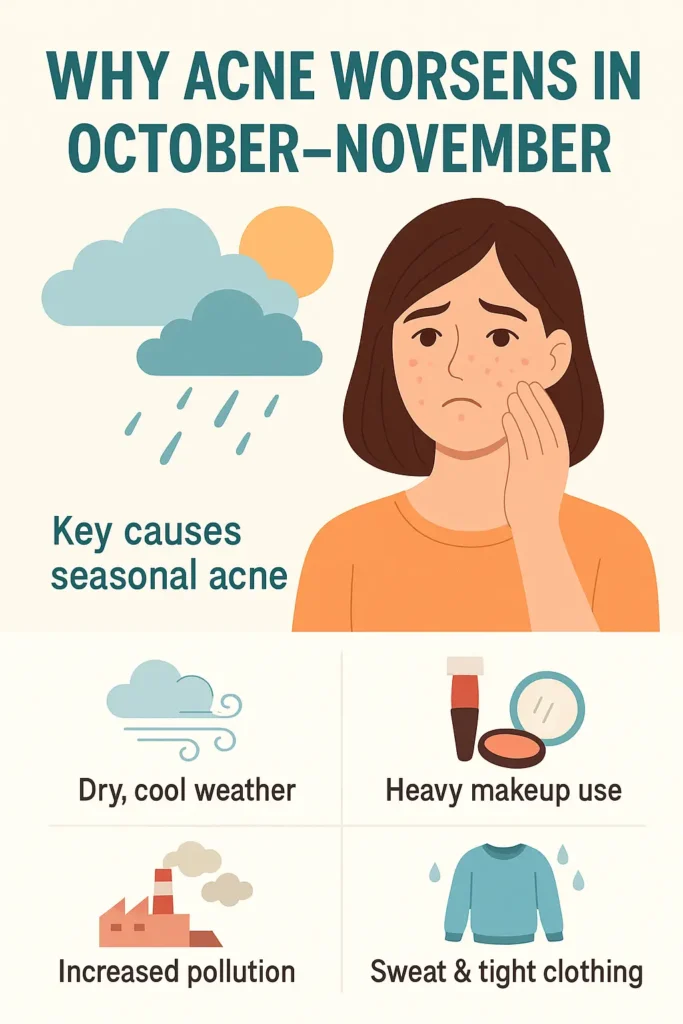
Why does this happen? The answer lies in the transitional weather. During these months, your skin experiences:
- Sudden drops in humidity
- Cooler winds that cause surface dryness
- Increased exposure to pollution and smog
- Heavier use of makeup and cosmetics for festive occasions
At Dr. Asma Skin Clinic, our patient records show a clear seasonal spike in acne visits during this time, reinforcing how climate and lifestyle patterns affect skin health.
How Seasonal Shifts Affect Your Skin
When October begins, the monsoon moisture starts fading, and by November, dry winter winds take over. This shift puts stress on the skin barrier (stratum corneum), making it more sensitive and prone to breakouts.
Here’s what happens in detail:
- Barrier disruption: Skin becomes dry, which triggers sebaceous glands to overcompensate by producing more oil. Excess oil clogs pores and fuels acne.
- Makeup & occlusion: Festival season means more makeup. Without proper cleansing, pores get blocked with oil, dust, and cosmetic residue.
- Pollution surge: North India sees worsening air quality in Oct–Nov. Fine particles settle on the skin, mixing with sebum and bacteria, triggering inflammation.
- Sweat & friction: Layered festive clothing and synthetic fabrics cause trapped sweat, particularly leading to back and chest acne.
This seasonal cycle explains why even people who don’t usually have breakouts may suddenly experience pimples, blackheads, or inflammatory acne during this time.
Why Acne Gets Worse in October–November
Dermatological research and clinical experience highlight four main reasons:
- Skin Barrier Disruption
The sudden dryness of October and November confuses the skin’s natural balance. While the surface feels dry, deeper sebaceous glands produce more oil, creating the perfect setting for clogged pores. - Hormonal & Lifestyle Triggers
- Late nights during wedding season disrupt sleep cycles.
- Stress levels increase, leading to cortisol spikes that worsen acne.
- High-sugar festive sweets increase insulin levels, triggering sebum production.
- Pollution & Smog Exposure
- Post-harvest stubble burning and industrial pollution contribute to higher PM2.5 levels.
- Fine pollutants block pores, cause oxidative stress, and inflame skin.
- Clothing & Sweat Traps
Wearing heavy or non-breathable clothing can trap sweat and bacteria, worsening body acne on the back, chest, and shoulders.
What You Can Do at Home (Evidence-Based Care)
If your acne tends to flare up in these months, follow these dermatologist-recommended steps:
- Gentle Cleansing: Use a mild, sulfate-free face wash twice daily. Avoid harsh scrubs, which strip natural oils and worsen breakouts.
- Hydration Balance: Apply a lightweight, non-comedogenic moisturizer. Hydrated skin produces less excess oil.
- Sunscreen Is Still Essential: Even in cooler weather, UV rays penetrate and worsen pigmentation from acne. Use SPF 30+ daily.
- Festival Skincare Routine: Always remove makeup thoroughly using micellar water or a dermatologist-approved cleanser.
- Lifestyle Tips: Stay hydrated, sleep on time, and limit high-sugar foods during festive months.
These steps help manage mild acne, but for persistent, inflamed, or recurring acne, professional care is essential.
Advanced Treatments That Actually Work
At Dr. Asma Skin Clinic, we provide evidence-based acne treatments customized for each patient. Some of the most effective include:
- Chemical Peels – Gently exfoliate dead cells, unclog pores, and reduce acne scars and pigmentation.
- Laser Therapy – Targets deep scars and resistant acne with precision.
- PRP for Skin – Uses your own platelets to stimulate collagen repair and improve skin texture.
- HydraFacial – A medical-grade facial that deeply cleanses, hydrates, and reduces acne congestion without irritation.
- Prescription-Based Treatments: Custom medications tailored after a dermatologist’s evaluation.
By addressing acne early with professional care, you can prevent long-term scars and dark spots.
Why Professional Help Matters
Many patients try over-the-counter creams or home remedies when acne worsens in October–November. Unfortunately, this often leads to:
- Delayed proper treatment
- Skin irritation or worsening due to inappropriate creams
- Increased risk of scarring and pigmentation
At Dr. Asma Skin Clinic, our 14+ years of dermatology expertise allow us to quickly diagnose the acne type and recommend the most effective solution.
FAQs – People Also Ask
Q1: Why does my skin break out more in October and November?
A: Seasonal weather changes cause dryness, excess oil production, and pollution exposure—all of which trigger acne.
Q2: Can winter reduce acne?
A: Not always. Some patients notice improvement, but others experience worsening due to dryness and overactive oil glands.
Q3: Can home remedies cure seasonal acne?
A: Home remedies may provide temporary relief, but professional treatments are safer and more effective for lasting results.
Q4: What is the fastest way to control acne before a wedding or event?
A: Chemical peels, HydraFacial, or prescription-based spot treatments provide quick visible improvements.
Q5: When should I see a dermatologist for acne?
A: If your acne is painful, recurrent, or leaving marks, consult a dermatologist immediately to prevent scarring.
Patient Experience
“During last Diwali, my acne suddenly flared up. I visited Dr. Asma Skin Clinic in Chowk, where I was advised chemical peels and HydraFacial sessions. Within weeks, my skin cleared up, and I looked confident in all my festive photos!” – Ritu Sharma, Lucknow.
Conclusion
Acne worsening in October and November is a common seasonal concern in North India. The good news is that with timely dermatological care, you can prevent scars and maintain clear skin through the festive and winter seasons.
📍 Visit Dr. Asma Skin Clinic – your trusted skin specialist in Lucknow, with clinics in Chowk, Thakurganj, and Barabanki.
Dr. Asma MD Skin Clinic – Chowk, Lucknow
Address: Subhash Chandra Bose Complex Mandi Crossing, Victoria St, Chowk, Lucknow, Uttar Pradesh 226003
Mobile: +91-9335312242
Find Us: Best Dermatologist in Lucknow
Dr. Asma Skin & Hair Clinic – Thakurganj, Lucknow
Address: NR- Ghante Wala Sweets, Thakurganj, Daulatganj, Lucknow, Uttar Pradesh 226003
Mobile: +91-9335312242
Find Us: Best Dermatologist in Thakurganj, Lucknow
Dr. Asma Skin Clinic – Barabanki
Address: Mohalla Ayodhya Nagar, Naka, Satrikh, Barabanki, Uttar Pradesh 225001
Mobile: +91-9335312242
Find Us: Best Dermatologist in Barabanki
Call/WhatsApp: +91-9335312242 to book your consultation today.
Don’t wait for acne to worsen—start treatment early for long-lasting results.