
Aloe vera is everywhere. It is in your moisturizer, your sunscreen, and your after-sun gel. People use it for sunburns, hydration, and soothing irritated skin.
But can it actually fade dark spots?
This is a question we hear often at our Chowk clinic. Patients want natural alternatives to chemical lightening agents. They have heard that aloe vera can brighten skin and reduce pigmentation.
Here is the truth: Aloe vera does contain compounds that may help with pigmentation. But its effects are subtle, gradual, and not a replacement for proven treatments.
In this guide, we will explain what science actually says about aloe vera for dark spots, how it works, and when you should see a dermatologist instead.
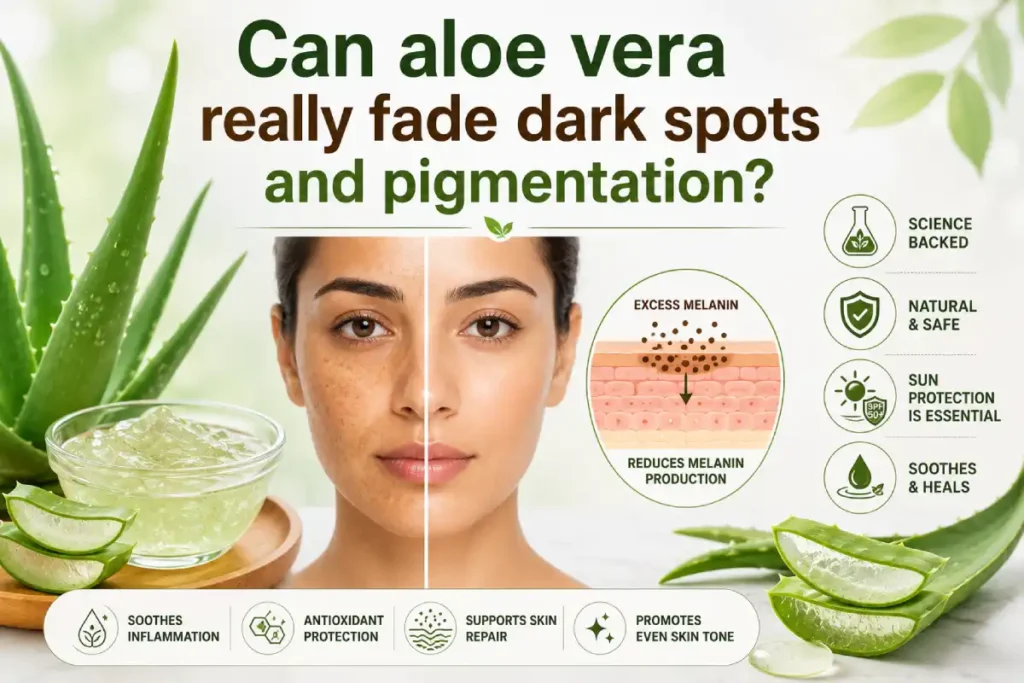
What Science Says About Aloe Vera and Pigmentation
Aloe vera is packed with more than 200 naturally occurring active substances — from vitamins and minerals to enzymes and amino acids. Among these, certain compounds have shown potential for addressing pigmentation.
Aloesin: The Key Compound
One of the most studied compounds in aloe vera for pigmentation is aloesin. Research has shown that aloesin can inhibit tyrosinase, the enzyme responsible for melanin production .
In one study, when aloe was applied to skin four times daily for two weeks, aloesin was found to fade post-acne hyperpigmentation effectively . Another report showed that topical aloesin can directly inhibit hyperpigmented skin from producing more melanin .
Clinical Evidence
According to a review of multiple clinical studies, aloe vera led to a 20-70% improvement in melasma pigmentation scores — results that were sometimes similar to those seen with 4% hydroquinone. Another scoping review identified aloe vera leaf gel as one of several herbal remedies with positive effects in treating melasma .
Additionally, fermented aloe vera leaf skin extracts have demonstrated enhanced skin-lightening effects. One study showed that fermented aloe extract significantly inhibited tyrosinase activity and melanin synthesis, performing better than commercial ingredients like arbutin and aloesin .
Important Limitations
Despite these promising findings, experts emphasize that aloe vera is not a miracle cure.
Dermatologists note that while aloe vera has anti-inflammatory and antioxidant properties, it cannot instantly fade dark spots or reverse sun damage . Results, if any, take time and are usually subtle .
As one dermatologist explains, “While there is a theoretical basis for aloe vera to lighten dark spots, it is neither guaranteed nor fast” .
How Aloe Vera May Help Fade Dark Spots
Aloe vera works through several mechanisms that may benefit pigmentation-prone skin:
| Mechanism | How It Works |
| Tyrosinase inhibition | Aloesin blocks the enzyme that produces melanin |
| Anti-inflammatory action | Reduces skin inflammation that triggers excess melanin production |
| Antioxidant protection | Neutralizes free radicals that damage skin and cause pigmentation |
| Skin healing | Promotes overall skin repair and regeneration |
Aloe vera also contains bradykinase, an enzyme that helps reduce excessive inflammation when applied topically . This is important because inflammation is a common trigger for post-inflammatory hyperpigmentation.
Who Might Benefit from Aloe Vera?
| Skin Concern | Likely Benefit |
| Post-acne dark spots (PIH) | Moderate. Studies show aloesin fades PIH |
| Melasma | Some evidence. Aloe vera reduced melasma scores in trials |
| Sun damage / hyperpigmentation | Potential benefit with consistent, long-term use |
| Sensitive skin (need gentle option) | Good alternative to harsh topicals |
How to Use Aloe Vera Safely for Dark Spots
If you want to try aloe vera for pigmentation, follow these guidelines:
Choosing the Right Product
- Look for 100% pure aloe vera gel without added fragrances, dyes, or alcohol
- Fresh gel from the plant can also be used (cut a leaf, scoop out the clear gel)
- Avoid aloe lotions for pigmentation — they are less concentrated and may contain irritating additives
Application Tips
| Step | Instructions |
| Patch test | Apply a small amount to your inner forearm. Give it 24 to 48 hours to see if any redness or irritation develops. |
| Application frequency | Use it on your dark spots once or twice each day. |
| Consistency | Results take weeks to months. Do not expect overnight changes |
| Sun protection | Always apply SPF 50+ sunscreen over the area — UV exposure can worsen pigmentation |
Note: Some people may experience redness, stinging, or allergic reactions. Discontinue use if irritation occurs .
Risks and Side Effects
Aloe vera is generally well tolerated but not without risks:
- Contact dermatitis — Some people develop allergic reactions or skin sensitivity
- Delayed healing — Applying aloe to infected or broken skin may trap bacteria and slow healing
- Irritation — High concentrations or frequent use may cause redness or dryness
- Added ingredients — Many commercial aloe gels contain alcohol, fragrances, or dyes that irritate skin
Who should be cautious:
- People with sensitive skin or allergies to plant families (Liliaceae)
- Anyone dealing with eczema, psoriasis, or existing skin infections
- Anyone who has had previous reactions to aloe products
When Aloe Vera Is Not Enough
Aloe vera may help with mild, surface-level pigmentation. But for deeper or more stubborn cases, it is not a substitute for medical treatment.
Consider professional help if:
| Sign | Why |
| Your dark spots remain unchanged even after using aloe consistently for 2-3 months. | You may need prescription-strength options |
| You have melasma (hormonal pigmentation) | Requires targeted protocols |
| Pigmentation is spreading or worsening | Could indicate an underlying condition |
| Home remedies are causing irritation | Professional products are safer and more effective |
Professional Treatments at Dr. Asma Skin Clinic
If aloe vera is not delivering results, we offer evidence-based treatments:
| Treatment | Best For |
| Chemical peels | Surface pigmentation, sun spots, PIH |
| Q-Switch Nd:YAG laser | Deep, stubborn pigmentation |
| Prescription creams | Melasma, resistant hyperpigmentation |
| Cosmelan peel | Specialized melasma treatment |
| Medical-grade sunscreen | Essential for preventing recurrence |
What’s the Final Verdict?
| Question | Answer |
| Does aloe vera fade dark spots? | Yes, it may help — but effects are gradual |
| How long does it take? | Weeks to months |
| Is it a proven treatment? | Some clinical evidence supports it |
| Does it work for all pigmentation? | More effective for mild/surface pigmentation |
| Is it safe? | Generally yes, but patch test first |
| Is it a replacement for dermatologist care? | No, especially for melasma or stubborn pigmentation |
About Dr. Asma Parveen
Dr. Asma Parveen is a board-certified dermatologist with 14+ years of experience in Lucknow. She specializes in pigmentation disorders, melasma, and post-acne dark spots.
At our Chowk clinic, she offers:
- Accurate diagnosis of your skin concern
- Customized treatment plans with peels, lasers, and prescription creams
- Medical-grade sunscreens and brightening products
Ready to Address Your Pigmentation?
Aloe vera may have a role in your routine — but it is not a substitute for professional care. If you have persistent dark spots, get the right diagnosis and treatment.
Visit our Clinics:
Dr. Asma MD Skin Clinic – Chowk, Lucknow
Subhash Chandra Bose Complex, Mandi Crossing, Victoria Street, Chowk Lucknow – 226003
Dr. Asma Skin & Hair Clinic – Thakurganj, Lucknow
Near Ghante Wala Sweets, Daulatganj Thakurganj, Lucknow – 226003
Dr. Asma Skin Clinic – Barabanki
Mohalla Ayodhya Nagar, Naka, Satrikh, Barabanki – 225001
Call/WhatsApp to Book Your Appointment: +91-9335312242
New patients: 10% off first consultation