

As the monsoon ends and October begins, we see a sharp rise in patients at our clinics in Chowk, Thakurganj, and Barabanki. The complaints are almost always the same — itchy rashes, fungal infections, and skin irritation.
The mix of lingering humidity, rising pollution, and changing weather creates ideal conditions for skin problems. While some cases can be prevented with better hygiene and lifestyle choices, others need timely medical care.
In this blog, we will explain why skin allergies worsen after monsoon, the most common conditions we see, preventive steps you can take, and when to seek help from a dermatologist.
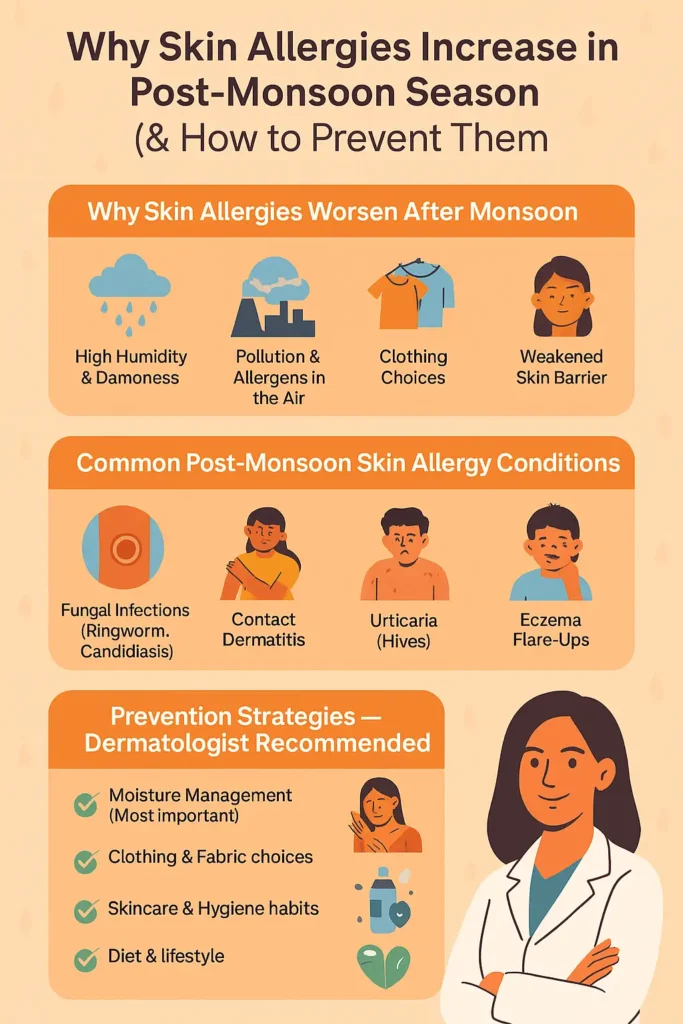
Why Skin Allergies Worsen After Monsoon
| Factor | How It Affects Your Skin |
| Lingering Humidity | Moisture in the air creates a breeding ground for fungi and bacteria, especially in skin folds like underarms, groin, and between toes |
| Rising Pollution | With festivals and crop-burning season, airborne pollutants increase significantly in October–November, irritating sensitive skin |
| Clothing Choices | Damp, unwashed, or synthetic fabrics trap sweat and moisture, worsening fungal infections |
| Weakened Skin Barrier | Continuous exposure to humidity weakens the outer skin layer, making skin more reactive to irritants |
| Increased Infections | Fungal infections mixed with bacterial colonization become harder to control without medical treatment |
Common Post-Monsoon Skin Conditions We See
1. Fungal Infections (Ringworm, Candidiasis)
Circular itchy patches, redness, and scaling that spread quickly. Common in skin folds and between toes. We see these most often in patients who wear damp clothes or share towels. If you are dealing with a persistent fungal infection , our clinic offers targeted treatment.
2. Contact Dermatitis
Skin irritation caused by soaps, detergents, cosmetics, or jewelry. Appears as rashes with burning or itching. For accurate diagnosis and effective dermatitis care, our clinic provides personalized treatment plans.
3. Urticaria (Hives)
Raised, itchy welts triggered by allergens like food, dust, or insect bites. Often appears suddenly and can be very uncomfortable. If hives persist or keep returning, a proper evaluation at our clinic can help identify the root cause.
4. Eczema Flare-Ups
Pre-existing eczema often worsens during seasonal change due to humidity and pollution. We see many patients who had controlled eczema suddenly flaring up. Our clinic offers targeted treatment to calm flare-ups and restore your skin barrier.
5. Seborrheic Dermatitis
Flaking, itching, and redness on the scalp, commonly mistaken for dandruff . Stress and weather changes are common triggers. For persistent scalp issues, we provide effective treatment that addresses the root cause.
Prevention Strategies – Dermatologist Recommended
1. Moisture Management
| Action | Why |
| Pat skin completely dry after bathing | Moisture in skin folds invites fungal growth |
| Use antifungal powder as advised | Prevents infection in high-risk areas |
| Avoid re-wearing damp or sweaty clothes | Damp fabric traps moisture against skin |
2. Clothing & Fabric Choices
| Action | Why |
| Stick to cotton and breathable fabrics | Allows skin to breathe |
| Change socks daily | Prevents athlete’s foot |
| Avoid synthetic underwear | Traps sweat and moisture |
| Wash clothes in hot water | Kills fungal spores |
3. Skincare & Hygiene Habits
| Action | Why |
| Use gentle, fragrance-free cleansers | Harsh soaps irritate skin |
| Avoid over-moisturizing sweaty areas | Excess moisture worsens infections |
| Do not share towels, combs, or personal items | Prevents spread of infections |
4. Diet & Lifestyle
| Action | Why |
| Eat Vitamin C, zinc, and probiotic-rich foods | Supports immunity |
| Reduce oily, sugary foods | These fuel fungal infections |
| Manage stress and get adequate sleep | Stress weakens skin barrier |
When to See a Dermatologist
Visit a skin doctor if:
| Sign | Why |
| Symptoms persist for more than 1-2 weeks | Needs proper diagnosis |
| Infections are spreading rapidly | May need prescription treatment |
| You have diabetes or weak immunity | Higher risk of complications |
| Severe itching disrupts sleep | Needs medical management |
| You have recurrent fungal infections | May need long-term prevention |
At Dr. Asma Skin Clinic, we use KOH testing, fungal cultures, dermoscopy, and allergy assessments to identify the root cause before starting treatment.
Treatment Options at Dr. Asma Skin Clinic
| Treatment | Best For |
| Topical creams/lotions | Customized antifungal or anti-inflammatory solutions |
| Oral medications | Severe or widespread infections |
| Medicated shampoos/nail lacquers | Scalp or nail involvement |
| Allergy management | Antihistamines or steroid creams if required |
| Follow-up care | Prevents recurrence and ensures complete recovery |
Explore all our services to learn more about how we can help.
About Dr. Asma Parveen
Dr. Asma Parveen is a board-certified dermatologist with 14+ years of experience in Lucknow. She specializes in fungal infections, skin allergies, and chronic skin conditions.
At our clinics in Chowk, Thakurganj, and Barabanki, we offer:
- Accurate diagnosis using KOH testing and dermoscopy
- Prescription-strength treatments for all skin conditions
- Long-term prevention plans
Frequently Asked Questions
1: Are fungal infections contagious?
Yes, they can spread through contact or sharing clothes and towels.
2: Can home remedies cure fungal infections?
Not effectively. Self-medication often leads to recurrence and resistance. Prescription treatment is needed.
3: How soon can I expect results after treatment?
With proper care, symptoms improve within 7–10 days. However, full treatment must continue as prescribed to prevent recurrence.
4: Do children get skin allergies more often in this season?
Yes, due to close contact in schools and weaker immunity.
5: Can skin allergies turn serious?
If untreated, they may cause bacterial infections, scars, or chronic skin conditions.
Ready to Get Relief from Skin Allergies?
Do not ignore persistent itching or rashes. Early treatment means faster recovery and fewer complications.
Visit our Clinics:
Chowk : Dr. Asma M.D. Skin Clinic, Subhash Chandra Bose Complex, Mandi Crossing, Victoria Street, Chowk Lucknow – 226003
Thakurganj: Dr. Asma Skin & Hair Clinic, Near Ghante Wala Sweets, Daulatganj Thakurganj, Lucknow – 226003
Barbanki: Dr. Asma Skin Clinic, Mohalla Ayodhya Nagar, Naka, Satrikh, Barabanki – 225001
Call/WhatsApp to Book Your Appointment: +91-9335312242
New patients: 10% off first consultation