
You have melasma. And you have heard that laser is the only solution.
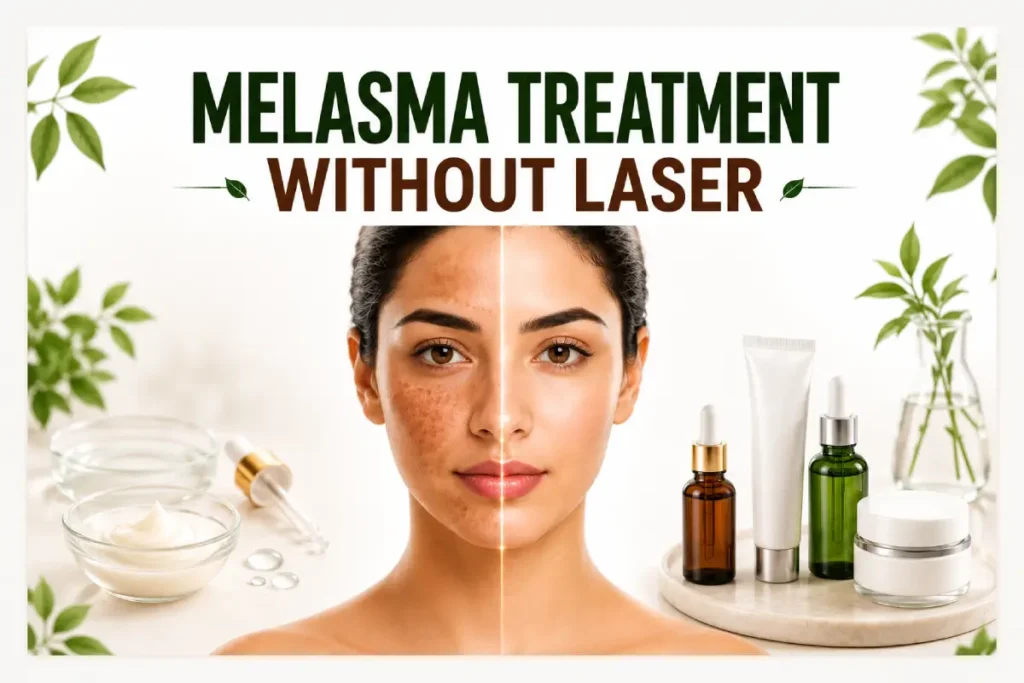
But what if you do not want a laser?
Maybe you are worried about the cost. Maybe you have darker skin and fear post-inflammatory pigmentation. Maybe you have heard stories of melasma worsening after a laser.
Here is the truth: Laser is not your only option.
Many effective melasma treatments do not involve lasers at all. From prescription creams to chemical peels to advanced depigmentation systems, there are multiple paths to clearer, more even skin.
At our Chowk clinic, we work with many patients who prefer non-laser approaches. The key is choosing the right treatment for your specific type of melasma and skin type.
In this guide, We will walk you through the most effective non-laser melasma treatments available — their pros, cons, and who they work best for.
Why Some Patients Avoid Laser for Melasma
Laser can be effective for melasma, but it is not for everyone. Here is why some patients prefer non-laser options:
| Reason | Explanation |
| Cost concerns | Laser sessions can be expensive, especially for multiple treatments |
| Fear of worsening | Aggressive lasers can trigger rebound pigmentation, especially in darker skin types |
| Skin type considerations | Darker skin tones have higher risk of post-inflammatory hyperpigmentation with lasers |
| Downtime | Some laser treatments require significant recovery time |
| Recurrence worry | Melasma often returns; patients prefer gentler, repeatable options |
Non-Laser Treatment Options for Melasma
Here are the most effective non-laser approaches available today.
1. Topical Prescription Creams
Topical creams are the first line of defense against melasma. They work by inhibiting melanin production and promoting skin cell turnover.
Hydroquinone (2-4%)
Hydroquinone is considered the gold standard topical treatment for melasma. It functions by blocking tyrosinase — the key enzyme involved in melanin synthesis.
| Aspect | Details |
| Best for | Short-term treatment of moderate to severe melasma |
| How to use | Apply once or twice daily to affected areas |
| Duration | Typically 2-3 months, then a break is recommended |
| Side effects | Irritation, redness; long-term use can cause ochronosis |
Key finding: Hydroquinone remains the gold-standard topical treatment despite its known side effects.
Tretinoin (Retinoid)
Tretinoin speeds up cell turnover, helping to fade pigmentation over time. It is often used in combination with hydroquinone.
| Aspect | Details |
| Best for | Superficial pigmentation, combination therapy |
| How to use | Apply at night only (increases sun sensitivity) |
| Duration | 3-6 months for visible results |
Kojic Acid
Kojic acid is a natural melanin inhibitor derived from fungi. It is gentler than hydroquinone and suitable for sensitive skin.
| Aspect | Details |
| Best for | Mild melasma, maintenance therapy |
| How to use | Once or twice daily |
| Side effects | Minimal irritation |
Azelaic Acid (15-20%)
Azelaic acid is effective for melasma with a good safety profile.
| Aspect | Details |
| Best for | Melasma with redness or acne |
| How to use | Twice daily |
| Side effects | Mild stinging, redness initially |
Thiamidol
Thiamidol is a newer depigmenting agent that has shown comparable efficacy to hydroquinone with a better tolerability profile.
| Aspect | Details |
| Best for | Patients who cannot tolerate hydroquinone |
| How to use | Twice daily |
| Side effects | Minimal irritation |
Niacinamide
Niacinamide (vitamin B3) prevents pigment transfer to skin cells. It is gentle and suitable for long-term use.
| Aspect | Details |
| Best for | Maintenance therapy, sensitive skin |
| How to use | Twice daily |
Triple Combination Creams
These contain hydroquinone + tretinoin + a mild steroid. They are highly effective but require a dermatologist’s prescription and supervision.
2. Chemical Peels
Chemical peels remove the outermost layers of skin, revealing fresher, less pigmented skin underneath. They are effective as adjunctive interventions used alongside topical depigmenting agents.
A systematic review found chemical peels safe and effective in the management of melasma, with glycolic acid being the most safe and effective option.
Glycolic Acid Peel (20-70%)
| Aspect | Details |
| Best for | Superficial melasma, combination therapy |
| Procedure | In-clinic application, 10-15 minutes |
| Downtime | 3-5 days of mild peeling |
| Sessions | 4-6 sessions at 2-4 week intervals |
Salicylic Acid Peel (20-30%)
| Aspect | Details |
| Best for | Oily skin, acne-prone skin with melasma |
| Procedure | In-clinic application, 5-10 minutes |
| Downtime | Minimal |
| Sessions | 4-6 sessions |
Lactic Acid Peel (50-80%)
| Aspect | Details |
| Best for | Sensitive skin, darker skin types |
| Procedure | In-clinic application, 10-15 minutes |
| Downtime | Mild peeling |
| Sessions | 4-6 sessions |
TCA Peel (Trichloroacetic Acid)
| Aspect | Details |
| Best for | Stubborn, resistant pigmentation |
| Procedure | In-clinic application, 10-15 minutes |
| Downtime | 7-10 days (significant peeling) |
| Sessions | 2-3 sessions |
Key finding: Both 35% glycolic acid and 4% retinol peels are effective in treating melasma, with significant improvements in pigmentation and quality of life.
Important for darker skin types: Chemical peels are most effective when used alongside other treatments, rather than as a standalone solution for melasma. This is especially important for individuals with darker skin tones, where overly aggressive peeling can actually worsen pigmentation. Superficial and very superficial peels are safest for common disorders such as melasma.
3. Cosmelan Peel (Specialized Melasma Treatment)
Cosmelan is a professional depigmentation treatment designed specifically for stubborn pigmentation, including melasma.
Cosmelan peeling targets the cells responsible for melanin production. It uses a blend of exfoliating acids and melanin-inhibiting substances such as kojic acid, phytic acid, and ascorbic acid (vitamin C).
How It Works:
| Phase | Description |
| Phase 1 (In-Clinic) | A thick mask is applied to the face and left for 8-12 hours |
| Phase 2 (At-Home) | After removal, a maintenance cream (Cosmelan 2) is applied twice daily for several weeks |
What It Treats:
- Hormonal melasma (including pregnancy-induced)
- Sun damage and freckles
- Post-inflammatory hyperpigmentation
- Uneven skin tone
Benefits:
- Safe for all skin tones, including darker skin
- Targets both existing pigmentation and prevents future pigmentation
- Only one in-clinic session required
- Visible improvement within 2-3 weeks
Who Should Avoid:
- Pregnant or breastfeeding women (consult your doctor)
- Active skin infections, eczema, or open wounds
- Those using strong retinoids or exfoliants
Expected Results: Initial improvement in 2-3 weeks; full results in 3-6 weeks.
4. Microneedling with PRP
Microneedling creates micro-injuries in the skin, triggering collagen production and enhancing absorption of topical treatments.
How It Works:
- A device with fine needles creates controlled micro-channels in the skin
- Topical depigmenting agents or PRP are applied
- The treatment stimulates skin renewal and reduces pigmentation
Key finding: Microneedling-assisted tranexamic acid delivery is significantly more effective than topical Kligman’s regimen in reducing melasma severity.
| Aspect | Details |
| What It Treats | Melasma (especially with topical tranexamic acid), post-inflammatory hyperpigmentation, skin texture |
| Benefits | Safe for darker skin types, minimal downtime (2-3 days of redness), enhances absorption of topical treatments |
5. Oral Medications
Oral medications target melasma from within, addressing hormonal and inflammatory factors.
Tranexamic Acid (Oral)
| Aspect | Details |
| How it works | Inhibits plasmin, which triggers melanin production |
| Typical dose | 250-500 mg twice daily |
| Duration | 8-12 weeks |
| Side effects | GI upset, headaches (rare) |
Tranexamic acid has shown similar MASI score improvements to triple-combination therapy with fewer adverse effects.
Metformin (Topical and Oral)
| Aspect | Details |
| How it works | Reduces inflammation, improves insulin sensitivity |
| Typically used | As a topical formulation in studies |
Metformin showed similar MASI score improvements to triple-combination therapy.
6. Alternative Approaches
Yoga and Naturopathy
A case report found that 60 days of yogic breathing, dietary changes, and mud packs improved MASI score by 85.12%. However, more studies are needed to confirm this approach.
Combination Therapy: Why It Works Best
Melasma is best treated with a multimodal approach. Available evidence suggests chemical peels are most effective as adjunctive interventions used alongside topical depigmenting agents (e.g., hydroquinone, tretinoin, azelaic acid), systemic therapies (e.g., tranexamic acid), or selected energy-based procedures.
Common Combination Protocols:
| Phase | Treatment | Purpose |
| Priming | Topical hydroquinone/tretinoin (4-6 weeks) | Prepare skin, reduce active pigmentation |
| In-Clinic | Chemical peel or Cosmelan or Microneedling | Remove surface pigmentation, enhance penetration |
| Maintenance | Kojic acid, azelaic acid, niacinamide | Prevent recurrence |
| Ongoing | Sunscreen (SPF 50+ with iron oxide) | Essential year-round |
Pros and Cons Comparison
| Treatment | Pros | Cons |
| Prescription Creams | Effective, affordable, widely available | Requires strict adherence, side effects possible |
| Chemical Peels | Fast visible results, works on multiple layers | Downtime, requires multiple sessions |
| Cosmelan Peel | Targets deep melasma, one session | Costly, significant peeling, strong post-care regimen |
| Microneedling | Safe for darker skin, enhances topical absorption | Multiple sessions needed |
| Oral Tranexamic Acid | Targets systemic factors | Potential side effects, requires monitoring |
When to See a Dermatologist
Melasma is a chronic condition. Over-the-counter products are rarely enough.
Visit a dermatologist if:
- Your melasma is spreading or worsening
- Over-the-counter products have not worked after 2-3 months
- You have melasma on your face and want safe, effective treatment
- You are unsure which treatment is right for your skin type
- You are pregnant or planning pregnancy
Treatment Options at Dr. Asma Skin Clinic, Chowk
We offer comprehensive non-laser melasma treatments:
| Treatment | Best For |
| Prescription topical creams | Hydroquinone, tretinoin, kojic acid, azelaic acid |
| Chemical peels | Glycolic, salicylic, lactic peels |
| Cosmelan peel | Stubborn, deep melasma |
| Microneedling with PRP | Melasma with texture concerns |
| Tranexamic acid | Vascular or hormonal melasma |
| Medical-grade sunscreen | Tinted sunscreen with iron oxide for daily protection |
For a personalized consultation, Call us at +91-9335312242 and book your appointment.
About Dr. Asma Parveen
Dr. Asma Parveen is a board-certified dermatologist with 14+ years of experience in Lucknow. She specializes in pigmentation disorders, melasma, and post-acne dark spots.
At our clinic, We offer:
- Accurate melasma diagnosis
- Customized non-laser treatment plans
- Cosmelan peel, chemical peels, and microneedling
- Medical-grade sunscreens with iron oxide
Ready to Treat Your Melasma Without Laser?
Laser is not your only option. With the right non-laser approach, you can achieve clearer, more even skin.
Visit our Clinics:
Dr. Asma MD Skin Clinic – Chowk, Lucknow
Subhash Chandra Bose Complex, Mandi Crossing, Victoria Street, Chowk Lucknow – 226003
Dr. Asma Skin & Hair Clinic – Thakurganj, Lucknow
Near Ghante Wala Sweets, Daulatganj Thakurganj, Lucknow – 226003
Dr. Asma Skin Clinic – Barabanki
Mohalla Ayodhya Nagar, Naka, Satrikh, Barabanki – 225001
Call/WhatsApp to Book Your Appointment: +91-9335312242
New patients: 10% off first consultation