
You apply hair oils. You use expensive shampoos. You avoid heat styling.
But your hair still looks thin, dull, and lifeless.
Here is something many people overlook: Your hair’s health starts from within.
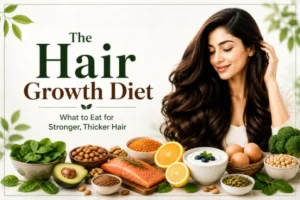
The food you consume plays a direct role in hair health. For your hair follicles to generate robust
strands, they require a consistent flow of essential nutrients. Without the right fuel, even the best hair care products cannot do their job.
In this guide, we will walk you through the key nutrients your hair needs, the best foods to eat, meal ideas to get started, and when diet alone is not enough.
Why Nutrition Matters for Hair Growth
Keratin — a type of protein — forms the primary structural component of your hair. Every single strand grows from a follicle beneath your scalp. For that follicle to produce healthy hair, it needs a constant supply of nutrients.
When you eat a nutrient-poor diet, your body prioritizes vital organs over hair growth. This means your hair gets the leftovers. The result? Thinning, shedding, slow growth, and dullness.
Hair grows about half an inch per month. This means dietary changes take time to show results. Sticking to a nutrient-rich diet over time can help your hair grow thicker, stronger, and more resilient.
Key Nutrients for Hair Growth
Let us look at the key nutrients your hair relies on — and what each one does.
1. Protein
Keratin, a protein your body produces naturally, makes up the structure of each hair strand. Without enough protein, your body cannot build strong hair strands. Severe protein deficiency can actually cause hair to stop growing and start shedding.
| Food Sources | Daily Goal |
| Eggs, chicken, fish, Greek yogurt, lentils, tofu | Include protein in every meal |
Signs of low protein: Hair looks thin, brittle, or is shedding more than usual.
2. Iron
Iron helps your red blood cells carry oxygen to your scalp and hair follicles. When iron levels are low, your hair follicles do not get enough oxygen. This can lead to increased shedding and slow growth.
| Food Sources | Daily Goal |
| Spinach, red meat, lentils, oysters, pumpkin seeds | 15-20 mg per day |
Signs of low iron: Pale skin, fatigue, cold hands, increased hair shedding.
3. Zinc
Zinc supports hair follicle function. It also helps your body build hair proteins and prevents hair follicle shrinkage. Low zinc levels are linked to hair loss and scalp problems like dandruff.
| Food Sources | Daily Goal |
| Pumpkin seeds, seafood, eggs, chickpeas, nuts | 10-15 mg per day |
Signs of low zinc: Thinning hair, slow growth, dandruff, dry scalp.
4. Omega-3 Fatty Acids
Omega-3 fatty acids are beneficial fats that help calm scalp inflammation and keep your skin hydrated. They support overall follicle health and add natural luster to your hair.
| Food Sources | Daily Goal |
| Salmon, sardines, walnuts, chia seeds, flaxseeds | 2-3 servings per week |
Signs of low omega-3: Dry, brittle hair; dry, itchy scalp.
5. Vitamin D
Vitamin D keeps your hair follicles cycling normally. Research shows that low vitamin D levels are linked to hair thinning and conditions like alopecia areata.
| Food Sources | Daily Goal |
| Fatty fish, eggs, mushrooms; also from sunlight | 15-20 mcg per day |
Signs of low vitamin D: Hair thinning, slow regrowth, fatigue.
6. Biotin (Vitamin B7)
Biotin supports the production of keratin — the same protein that your hair is built from. While deficiency is rare, eating enough biotin supports healthy hair structure.
| Food Sources | Daily Goal |
| Eggs, almonds, avocados, sweet potatoes, salmon | 30-100 mcg per day |
Signs of low biotin: Brittle hair, hair loss, splitting ends.
7. Vitamin C
Vitamin C helps your body absorb iron. It also produces collagen, which strengthens the hair shaft and prevents breakage.
| Food Sources | Daily Goal |
| Oranges, lemons, amla, tomatoes, bell peppers | 75-90 mg per day |
Top Foods for Hair Growth
Now, let us look at the most effective foods to add to your meals for healthier hair.
- Eggs
Eggs are packed with protein and biotin. They also contain selenium and zinc — two minerals that support hair health. Having one egg daily offers your hair a reliable source of essential nutrients.
- Salmon
Salmon is rich in omega-3 fatty acids and vitamin D. These nutrients help maintain a healthy scalp environment and keep follicles functioning well. Plus, salmon delivers protein that supports hair growth from within.
- Spinach
Spinach is packed with iron, vitamin A, vitamin C, and folate. The vitamin A content encourages your scalp to produce natural oils, which help keep hair moisturized and glossy.
- Nuts and Seeds
Almonds, walnuts, flaxseeds, chia seeds, and pumpkin seeds are packed with zinc, vitamin E, and omega-3s. A handful a day can support your hair’s health.
- Lentils
Lentils offer a powerful combination of protein and iron — ideal for those who prefer plant-based options. They are also rich in folate, which helps red blood cells carry oxygen to your scalp.
- Greek Yogurt
Greek yogurt is high in protein and vitamin B5. Vitamin B5 helps nourish hair follicles and improve blood flow to your scalp.
- Citrus Fruits
Oranges, lemons, and amla are rich in vitamin C. Vitamin C helps your body absorb iron and produces collagen for stronger hair.
Quick Diet Plan for Hair Growth
Here is a sample day of eating to support your hair:
| Meal | Ideas |
| Breakfast | Greek yogurt with berries, pumpkin seeds, and honey |
| Lunch | Spinach salad with grilled chicken, walnuts, and lemon dressing |
| Snack | A handful of almonds or an orange |
| Dinner | Salmon with roasted vegetables and quinoa |
Drinking water: Aim for 2-3 liters daily. Hydration is essential for scalp health.
Foods to Limit
| Food | Why |
| Sugary foods | High sugar causes inflammation, which can trigger shedding |
| Processed foods | Low in nutrients, high in inflammatory oils |
| Alcohol | Dehydrates your body and depletes essential nutrients |
How Long Until You See Results?
Hair grows slowly — about half an inch per month.
Realistic timeline:
| Timeframe | What to Expect |
| 1-2 months | Hair may appear healthier (shinier, softer) |
| 3-4 months | New growth may be visible at your temples and roots |
| 6-12 months | Noticeable improvement in overall thickness |
Important: Patience is essential. If you change your diet today, it will take months to see changes in your hair.
When Diet Alone Is Not Enough
A healthy diet is essential — but it cannot solve every hair problem.
Diet cannot reverse genetic hair loss. Conditions like male pattern baldness, female pattern baldness, and alopecia areata require medical treatment, not just nutrition.
Diet cannot replace medications or therapies. If your hair loss is due to hormonal imbalances or autoimmune conditions, professional care is needed.
Signs you need to see a dermatologist:
| Sign | Why |
| Sudden or patchy hair loss | Could be autoimmune or another condition |
| Hair loss with fatigue or weakness | Could indicate systemic issues |
| No improvement after 3-4 months of diet change | Need professional evaluation |
| You have bald patches or scarring | Needs medical treatment |
| Hair loss is affecting your confidence | Mental health matters too |
Professional Treatments at Dr. Asma Skin Clinic
If you are doing everything right but still losing hair, we offer proven treatments:
| Treatment | Best For |
| PRP Therapy | Stimulates natural hair growth |
| GFC Treatment | Advanced hair fall management |
| Nutritional counseling | Identify and fix deficiencies |
| Prescription medications | Minoxidil, finasteride for pattern baldness |
| Scalp treatments | Dandruff, itchiness, scalp infections |
Frequently Asked Questions
1. Can supplements replace food for hair growth?
No. Your body absorbs nutrients better from food than from supplements. Use food first, and only take supplements if a blood test shows a deficiency.
2. How much protein do I need daily?
Around 0.8-1 gram of protein per kilogram of body weight. For a 60 kg person, about 50-60 grams daily. Include protein in every meal.
3.Can diet reverse baldness?
No. Genetic baldness requires medical treatment. A healthy diet supports hair health, but it cannot reverse pattern baldness.
4. Does eating junk food cause hair fall?
Yes, indirectly. Sugary, processed foods cause inflammation and deplete nutrients, both of which can trigger shedding.
5. Should I take biotin supplements?
Only if you are deficient. Most people get enough biotin from food. Excessive biotin can interfere with lab tests and cause skin reactions.
6.How do I know if I have a deficiency?
See a dermatologist. A simple blood test can check for iron, vitamin D, B12, zinc, and thyroid function.
About Dr. Asma Parveen
Dr. Asma Parveen is a board-certified dermatologist with 14+ years of experience in Lucknow. She specializes in hair disorders, PRP therapy, and scalp conditions.
At our Chowk clinic, she offers:
- Complete hair fall assessment
- Nutritional deficiency testing
- PRP and GFC treatments
- Prescription hair medications
- Long-term maintenance plans
Ready for Thicker, Healthier Hair?
Your hair’s health starts on your plate. Start eating for your hair today — and if you need professional guidance, we are here to help.
Visit our Clinics:
Dr. Asma M.D. Skin Clinic – Chowk, Lucknow
Subhash Chandra Bose Complex, Mandi Crossing, Victoria Street, Chowk Lucknow – 226003
Dr. Asma Skin & Hair Clinic – Thakurganj, Lucknow
Near Ghante Wala Sweets, Daulatganj Thakurganj, Lucknow – 226003
Dr. Asma Skin Clinic – Barabanki
Mohalla Ayodhya Nagar, Naka, Satrikh, Barabanki – 225001
Call/WhatsApp to Book Your Appointment: +91-9335312242
New patients: 10% off first consultation