
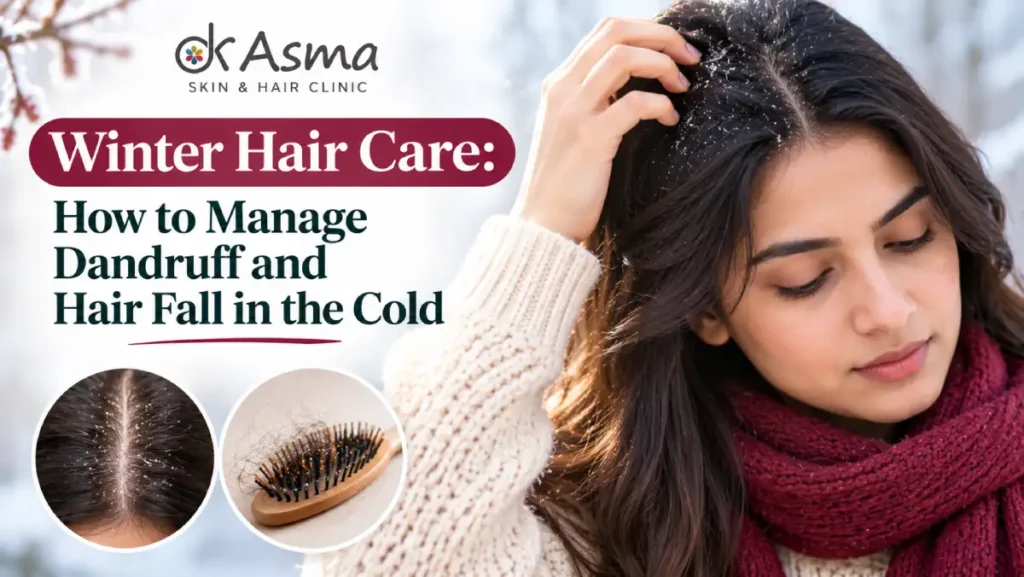
Summary: In winter, dry air, hot showers, woollen caps and less frequent hair washing can leave the scalp flaky and itchy, and many people also notice more hair on the comb. Small white flakes on a tight scalp usually point to dryness, while oily, yellowish flakes with itching are more likely dandruff. Washing your hair regularly with lukewarm water, using a medicated anti-dandruff shampoo when needed, and avoiding heavy oil on an itchy scalp help most people. Flaking or hair fall that lasts more than a few weeks should be checked by a dermatologist.
As soon as the cold sets in across Lucknow, the same complaints start: white flakes on dark shawls and sweaters, an itchy scalp under the monkey cap, and more hair on the pillow and comb than usual. Many people respond by washing less, oiling more and using very hot water, and these habits can make both problems worse.
In this guide, Dr Asma Parveen, a skin doctor in Lucknow, explains why winter is hard on the scalp, how to tell a dry scalp from dandruff, why hair fall can increase in the cold, and a simple routine to keep your scalp and hair healthy until spring.
Why winter is hard on your scalp and hair
| Winter habit or condition | What it does to your scalp and hair |
| Cold, dry air outdoors and heaters indoors | Pulls moisture from the scalp, leaving it tight and flaky |
| Very hot water for washing hair | Strips natural oils and can increase dryness and itching |
| Washing hair less often in the cold | Oil, sweat and flakes build up, which can worsen dandruff |
| Woollen caps and mufflers worn for hours | Trap heat and sweat, and rub against the hair, causing breakage |
| Going out with damp hair | Hair is weaker when wet and may break more easily in cold wind |
| Heavy oiling left overnight on an itchy scalp | Can add to buildup and make dandruff worse for some people |
| Less water, more tea and heavier food | Can leave the scalp and hair feeling drier |
Dry scalp or dandruff? How to tell the difference
Dry scalp and dandruff look similar, but they need different care. Using the wrong approach is one reason flakes keep coming back.
| Dry scalp | Dandruff (seborrhoeic dermatitis) | |
| Flakes | Small, fine, white and dry | Larger, oily, yellowish or white, sometimes sticky |
| Scalp feel | Tight and dry, especially after washing | Oily, itchy, sometimes red |
| Other areas | Skin on the body may also be dry | Flaking may also appear on the eyebrows, sides of the nose, behind the ears or on the chest |
| What helps | Gentle shampoo, lukewarm water, a little moisture | Regular washing with a medicated anti-dandruff shampoo |
Behind most dandruff is Malassezia, a tiny yeast that is present on almost everyone’s scalp and thrives on the natural oil the scalp produces. In some people, it triggers irritation and faster shedding of skin cells, which appears as flakes. It isn’t caused by poor hygiene, and it isn’t contagious.
Many people have both at once in winter: a dry, tight scalp along with dandruff.
Why does hair fall increase in winter?
Seeing more hair on your comb in the colder months is common, and it is usually temporary. Losing around 50 to 100 hairs a day is considered normal; many people notice a little more than this in late autumn and winter.
Winter hair fall can increase because of:
- Seasonal shedding: hair goes through growth and resting cycles, and shedding can rise for a few weeks at certain times of year
- Breakage, not true hair loss: dry, brittle hair snaps more easily under caps, scarves and rough towels
- An itchy, flaky scalp: constant scratching and an inflamed scalp can add to shedding
- Illness and fever: winter colds, flu or a high fever can trigger heavier shedding a few weeks to months later
- Low iron, vitamin D or protein, which can make hair fall worse
Can dandruff cause hair fall? Dandruff itself doesn’t usually cause permanent hair loss. But a very itchy, inflamed scalp, along with frequent scratching, can increase shedding and breakage. Once the dandruff is under control, this hair fall usually settles.
If hair fall continues beyond 2 to 3 months, if your parting is getting wider, or if you notice bald patches, it is more than seasonal shedding and needs a check-up.
A simple winter scalp and hair care routine
1. Don’t stop washing your hair
Washing less in winter lets oil and flakes build up. Most people do well washing two to three times a week, and those with oily scalps or dandruff may need it more often.
2. Use lukewarm water, not hot water
Hot water feels good in the cold, but it dries the scalp. Keep it comfortably warm, and finish with a slightly cooler rinse.
3. Choose the right shampoo
- For a dry scalp: a soft, non-medicated shampoo that cleans without leaving the scalp tight.
- For dandruff: a medicated anti-dandruff shampoo with ingredients such as ketoconazole, zinc pyrithione, selenium sulfide or ciclopirox
How to use an anti-dandruff shampoo properly: massage it into the scalp, not just the hair, and leave it on for 3 to 5 minutes before rinsing. Many people rinse it off immediately, which reduces how well it works. Use it as advised on the label or by your doctor, usually two to three times a week at first.
4. Condition the lengths, not the scalp
Apply conditioner from the middle of your hair to the ends to reduce dryness and breakage, and keep it off the scalp if you have dandruff.
5. Dry your hair before stepping out
Pat your hair dry with a soft cotton towel or old cotton T-shirt. If you use a hair dryer, keep it on a low or medium setting and hold it at a distance. Stepping into a chilly breeze while your hair is still damp is best avoided.
6. Keep caps and scarves clean
Wash woollen caps and mufflers regularly, as they collect oil, sweat and flakes. A cap with a cotton or silk lining reduces friction on the hair. Avoid sharing caps, combs and towels.
7. Be gentle
Use a wide-toothed comb, avoid tight hairstyles, and limit straighteners and curling irons.
Should you oil your hair in winter?
Oiling is a much-loved winter habit, and a little oil can help soften dry, rough hair lengths. But if you have dandruff, heavy oil left on the scalp overnight can add to the buildup and may make flaking and itching worse for some people.
- With a dry scalp and no dandruff: a light oil massage before washing, for 30 to 60 minutes, is usually fine.
- With dandruff: apply oil only to the hair lengths, not the scalp, or skip it until the dandruff settles.
- Always wash it off well, and don’t leave oil on the scalp for days.
Read more in our guide on coconut oil for hair: benefits, myths and what science says.
Food and lifestyle for healthier winter hair
- Eat enough protein: dal, paneer, curd, eggs, chana, rajma and sprouts help supply what hair needs to grow.
- Include iron-rich foods: green leafy vegetables like palak and methi, jaggery, dates and, if you eat them, eggs and meat.
- Drink water, not just tea and coffee, through the day.
- Get some sunlight, and ask your doctor whether you need a vitamin D test.
- Manage stress and sleep, as both can affect hair fall.
Avoid starting hair supplements on your own. They help mainly when there is a proven deficiency, and a simple blood test can show what you actually need.
Common myths about winter dandruff and hair fall
| Myth | Fact |
| Dandruff means your scalp is dirty | Flakes come from yeast and oil on the scalp; people who wash regularly can still get dandruff. |
| Washing less in winter protects the hair | Washing less lets flakes and oil build up, which can worsen dandruff. |
| More oil will cure dandruff | Heavy oil on the scalp can make dandruff worse for some people. |
| Lemon on the scalp removes dandruff | Lemon can sting and irritate the scalp, especially if it is already dry or scratched. |
| Winter hair fall means you are going bald | Seasonal shedding is usually temporary and settles in a few months. |
When to see a dermatologist
See a dermatologist if you have:
- Flakes or itching that don’t improve after 3 to 4 weeks of using an anti-dandruff shampoo
- Red, thick or silvery scaly patches, which may be psoriasis
- Flaking that spreads to the face, eyebrows, ears or chest
- Painful, oozing or crusted areas on the scalp
- Hair fall lasting more than 2 to 3 months, a widening parting or bald patches
- In children: a scaly, itchy scalp with patches of broken hair, which can be a fungal infection (tinea capitis) that needs prescription treatment, not just shampoo
A dermatologist can find the actual cause and may suggest medicated shampoos or scalp lotions, short courses of anti-inflammatory treatment, tests for deficiencies or thyroid problems, and, for ongoing hair loss, treatments such as PRP or other options suited to you. Results vary from person to person.
For more cold-weather care, read our complete winter skincare guide for Lucknow.
Consult a dermatologist in Lucknow
If winter dandruff or hair fall is not settling, Dr Asma Parveen can examine your scalp, find the cause and suggest a treatment plan suited to you.
Chowk: Dr. Asma M.D. Skin Clinic, Subhash Chandra Bose Complex, Mandi Crossing, Victoria Street, Chowk, Lucknow – 226003
Thakurganj: Dr. Asma Skin & Hair Clinic, Near Ghante Wala Sweets, Daulatganj, Thakurganj, Lucknow – 226003
Barabanki: Dr. Asma Skin Clinic, Mohalla Ayodhya Nagar, Naka, Satrikh, Barabanki – 225001
Call/WhatsApp: +91-9335312242
Frequently asked questions
- Why does dandruff get worse in winter?
Dry air, hot water, washing hair less often and wearing caps for long hours can all increase flaking and itching in winter.
- How often should I wash my hair in winter if I have dandruff?
Usually two to three times a week, or more often if your scalp is oily. Use a medicated anti-dandruff shampoo and leave it on for 3 to 5 minutes before rinsing.
- Is it normal to lose more hair in winter?
A mild increase in shedding is common and usually settles within a few months. See a doctor if it lasts longer, or if you notice a wider parting or bald patches.
- Can dandruff cause hair fall?
It doesn’t usually cause permanent hair loss, but an itchy, inflamed scalp and constant scratching can increase shedding and breakage.
- Should I apply oil if I have dandruff?
It’s better to keep heavy oil off the scalp when you have dandruff. You can apply a little to the hair lengths and wash it off well.

Note: This blog is for general awareness only and is not a substitute for a medical consultation. Results vary from person to person. Please consult a qualified dermatologist before starting any treatment.