
Acne can appear in many forms, but one of the most severe and frustrating types is cystic acne. Unlike regular pimples, cystic acne develops deep within the skin and often causes painful, swollen lesions that may leave scars if not treated properly.
According to dermatology guidelines, cystic acne occurs when inflammation and bacteria affect deeper layers of the skin, leading to large, tender bumps known as cysts or nodules. These lesions typically do not respond well to over-the-counter treatments and require professional medical care.
In Lucknow, patients dealing with persistent and painful acne often consult Dr. Asma Parveen, widely regarded as one of the best dermatologists in Lucknow for advanced acne and acne scar management, for proper diagnosis and evidence-based treatment.
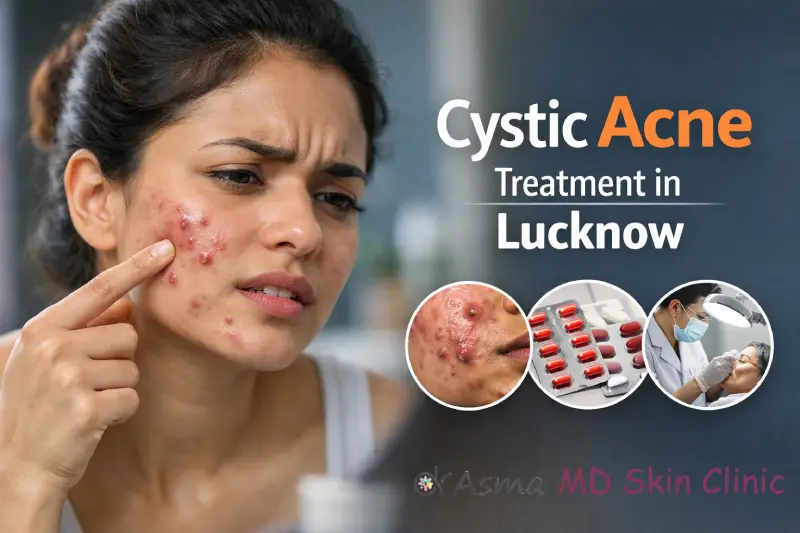
What Is Cystic Acne?
Cystic acne is the most severe type of acne within the acne vulgaris spectrum. It forms when pores become blocked with oil, dead skin cells, and bacteria, causing deep inflammation under the skin.
Unlike mild acne, cystic acne usually appears as:
- Large red bumps under the skin
- Painful swelling and tenderness
- Deep lesions that take weeks to heal
- High risk of acne scars and pigmentation
These breakouts often occur on the face, jawline, chest, shoulders, and back.
Painful Pimples: Why Do They Occur?
Painful breakouts usually occur when inflammation develops deeper within the skin. This inflammation may be influenced by several factors such as:
- Increased oil activity in the skin
- Hormonal fluctuations
- Emotional stress or lack of sleep
- Genetic tendency toward acne
- Certain medications or pore-clogging cosmetic products
Because the inflammation occurs deeper in the skin, squeezing or picking these pimples can worsen the condition and increase the risk of scarring.
Nodular Acne
Nodular acne is a severe form of inflammatory acne where large, solid lumps form under the skin.
Characteristics of nodular acne include:
- Painful lumps that form deep under the skin
- Deep inflammation without a visible whitehead
- Long healing time (sometimes weeks)
- High chance of permanent acne scars
Nodular acne is often mistaken for cystic acne, but nodules tend to be firmer and do not contain pus.
Deep Acne: Why Early Treatment Matters
Deep acne lesions develop in the lower layers of the skin, making them difficult to treat with topical creams alone.
Without proper treatment, deep acne can lead to:
- Permanent acne scars
- Dark spots (post-inflammatory hyperpigmentation)
- Recurrent breakouts
- Skin texture damage
Early dermatological care significantly reduces the risk of long-term skin damage.
Evidence-Based Treatments for Cystic Acne
Treatment for cystic acne depends on severity, skin type, and medical history. Dermatologists typically combine multiple treatment approaches.
Topical Treatments
Doctors may prescribe medicated creams or gels to help manage acne. These may include:
- Retinoid creams to keep pores clear
- Benzoyl peroxide treatments to reduce acne-causing bacteria
- Topical antibiotic creams to control infection and inflammation
These treatments help reduce bacteria, prevent blocked pores, and calm skin inflammation.
Oral Medications
For moderate to severe cystic acne, dermatologists may recommend oral medicines when topical treatments alone are not enough. These may include:
- Oral antibiotics to help control bacteria and reduce inflammation
- Hormone-related treatments in women whose acne is linked to hormonal changes
- Isotretinoin, which may be considered for severe acne that does not improve with other treatments
Because these medicines can have side effects, they should only be taken under the guidance of a qualified dermatologist.
Dermatological Procedures
Certain clinical procedures can improve severe acne and prevent scarring:
- Chemical peels
- Acne extraction
- Laser and light therapies
- Anti-inflammatory injections for large cysts
These treatments help reduce inflammation and improve overall skin healing.
Skincare Tips for Deep Acne
Medical treatment is important for controlling severe acne, but proper daily skincare can also help reduce breakouts and support healing. Some helpful habits include:
- Choosing non-comedogenic skincare products that do not clog pores
- Avoiding touching, squeezing, or picking pimples, as this can worsen inflammation
- Cleaning the face gently twice a day to remove oil and dirt
- Applying sunscreen regularly to reduce the risk of dark spots after acne
- Maintaining a healthy diet and managing stress levels
These simple practices can support treatment and help improve overall skin health.
When Should You See a Dermatologist?
You should consult a dermatologist if:
- Pimples are painful or located deep under the skin
- Breakouts keep returning frequently
- Acne is causing dark marks or scars
- Regular over-the-counter products are not improving the condition
Severe acne often needs medical treatment and prescription medicines to control inflammation and reduce the risk of permanent skin damage.
FAQs About Cystic Acne
- What causes cystic acne?
Cystic acne develops when hair follicles become blocked with excess oil (sebum), dead skin cells, and bacteria. This blockage causes deep inflammation under the skin, leading to painful cysts or nodules. Hormonal changes, genetics, stress, and certain medications can increase the risk of cystic acne.
- How is cystic acne different from regular pimples?
Regular pimples usually appear on the surface of the skin and heal relatively quickly. Cystic acne forms deeper in the skin layers and often appears as large, painful, swollen bumps. Because it occurs deeper in the skin, cystic acne has a higher risk of causing scars and often requires medical treatment.
- Can cystic acne be treated permanently?
Cystic acne can be effectively controlled with proper dermatological treatment. Treatment may include prescription topical medications, oral medications, or procedures such as chemical peels or laser therapies. Early treatment helps reduce breakouts and prevents long-term scarring.
- Is it safe to pop or squeeze cystic acne?
Dermatologists strongly advise against popping or squeezing cystic acne. These lesions are located deep within the skin, and squeezing them can worsen inflammation, spread bacteria, and increase the risk of permanent scars and dark spots.
- When should I see a dermatologist for cystic acne?
You should consult a dermatologist if acne becomes painful, forms deep lumps under the skin, leaves marks or scars, or does not improve with over-the-counter treatments. Early professional care can help control severe acne and prevent long-term skin damage.
Book a Consultation for Cystic Acne Treatment in Lucknow
If you are experiencing painful pimples, nodular acne, or deep cystic breakouts, early dermatological care can prevent scarring and long-term skin damage.
At Dr. Asma M.D – Skin & Hair Clinic, Lucknow, each treatment plan is designed after a thorough dermatological evaluation to address acne severity, underlying causes, and your individual skin needs.
Call: +91-9335312242
Visit our Clinic:
Dr. Asma MD Skin Clinic – Chowk, Lucknow
Subhash Chandra Bose Complex, Mandi Crossing, Victoria Street, Chowk Lucknow – 226003
Dr. Asma Skin & Hair Clinic – Thakurganj, Lucknow
Near Ghante Wala Sweets, Daulatganj Thakurganj, Lucknow – 226003
Dr. Asma Skin Clinic – Barabanki
Mohalla Ayodhya Nagar, Naka, Satrikh, Barabanki – 225001
Call/WhatsApp to Book Your Appointment: +91-9335312242
Professional care can help control severe acne and restore healthier, clearer skin.